







Is a Forex EA Worth It? A Pragmatic Investor’s Verdict


Is a Forex EA Worth It? A Pragmatic Investor’s Verdict
The promise of a Forex Expert Advisor (EA) is intoxicating: a ‘money machine’ that trades for you 24/5 while you sleep. For busy professionals, from IT managers in London to entrepreneurs in Austin, the idea of automating one of the most complex financial markets in the world is the ultimate dream. But as many traders discover, the reality can be a brutal lesson in risk.
So, let’s get straight to the point. A Forex EA can be worth it, but only if it has a verifiable live track record, a logical trading strategy, and the user understands the full costs and manages risk appropriately. For most traders, off-the-shelf EAs are not worth the investment due to unrealistic promises and hidden risks.
In this data-driven guide, we’ll cut through the marketing hype. We won’t sell you an EA. Instead, at CheapForexEA.com, we provide you with the exact analytical framework—The Pragmatic Investor’s Verdict—to determine for yourself if an EA is a worthwhile investment or a financial trap. We will analyze the true costs, provide a 5-point evaluation scorecard, and reveal what real traders on forums are actually saying.
Before we begin our analysis, it’s crucial to understand what these ‘Forex robots’ are. For a complete beginner’s overview, see our Ultimate Guide to Forex Expert Advisors.
The Sobering Reality: Contrasting EA Expectations with Market Truths
The single biggest reason traders fail with automated trading is the enormous gap between marketing promises and market reality. Sales pages often paint a picture of effortless, hands-off income. This narrative is compelling but dangerously misleading.
An EA is not a magical solution; it is a tool. Its effectiveness is not guaranteed. It depends entirely on its coded strategy, the current market conditions, and—most importantly—your active management and understanding. Successful EA users are not passive bystanders; they are active system managers. The first step in deciding if an EA is worth it is to replace hype with a healthy dose of realism.
Here is a clear breakdown of common expectations versus the hard truths of using an EA:
| Common Expectation | Market Reality |
|---|---|
| “Set & Forget Passive Income” | Requires Constant Monitoring: EAs need supervision. Market conditions change, software needs updates, and technical issues like a lost connection can occur. |
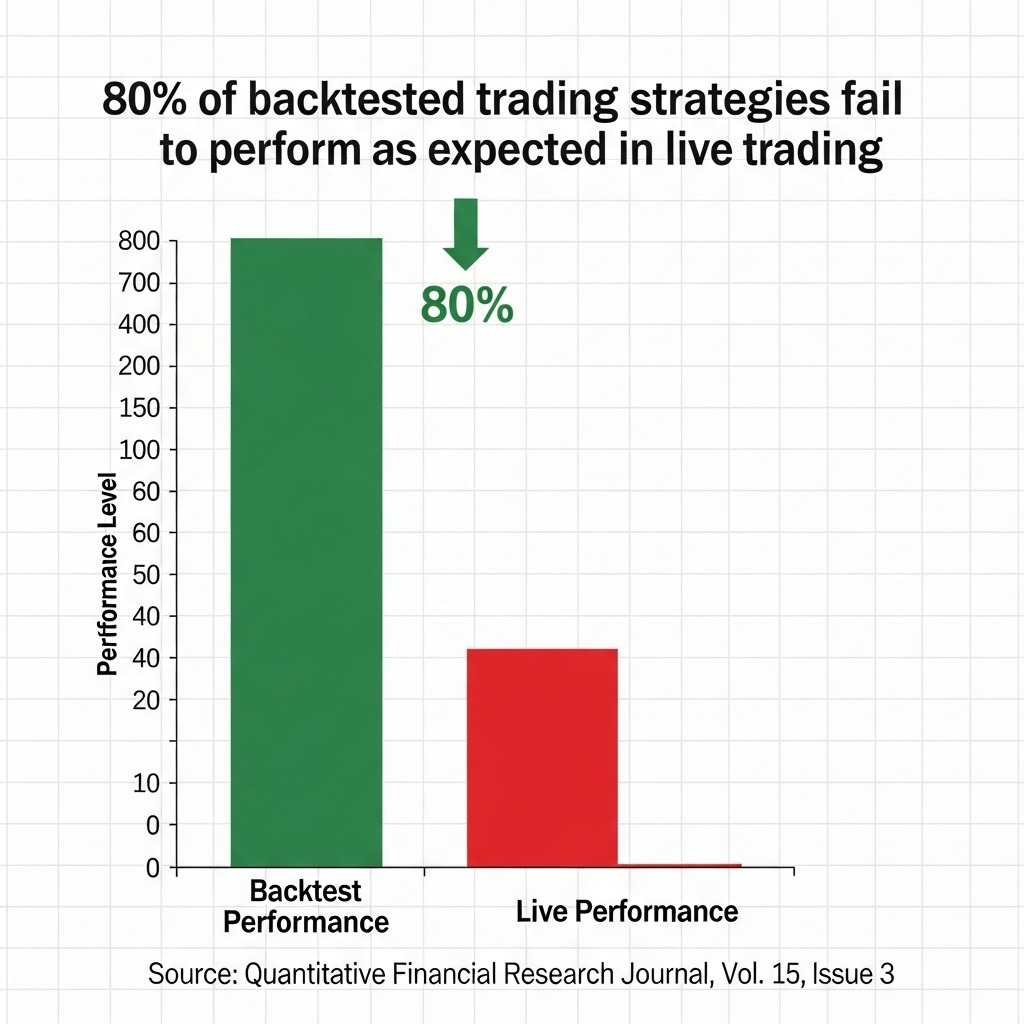
| “99% Win Rate Backtests” | Backtests are Often Curve-Fitted: A backtest can be manipulated to look perfect on historical data. This provides zero guarantee of future performance. |
| “Works in All Market Conditions” | Strategies Fail When Markets Change: An EA designed for a trending market can perform poorly or even fail completely when the market starts ranging, and vice-versa. |
Beyond the Sticker Price: Calculating the True Cost of Running an EA
Many aspiring traders only consider the purchase price of a Forex robot. This is a critical mistake. The real worth of an EA can only be determined by calculating the total cost of operation against its potential—and realistic—return on investment. The sticker price is often the smallest part of the overall financial commitment.
To properly assess the costs, you must think like a business owner funding a new venture. Here is a sample budget to understand the true financial picture:
| Cost Component | Typical Range | Why It’s Essential |
|---|---|---|
| 1. EA Purchase/Subscription | $99 (one-time) to $150+/month | This is the initial software cost. One-time fees are common, but some premium EAs operate on a subscription model for ongoing support and updates. |
| 2. Virtual Private Server (VPS) | $15 – $50/month | A VPS is a remote computer that runs 24/7. It is non-negotiable. It ensures your EA runs without interruption, even if your home internet or computer shuts down. Latency is critical in trading, and a good VPS minimizes it. |
| 3. Minimum Trading Capital | $1,000+ | While you can technically start with less, a capital base of at least $1,000 provides enough buffer for the EA to manage trades and withstand normal market fluctuations without being stopped out too early. |
| 4. Risk Capital / Max Drawdown | (e.g., 25% of capital = $250) | This is the most crucial, and most overlooked, cost. You must quantify the amount of money you are willing to lose while the EA proves itself. This is the “price of admission” and must be considered a real potential business expense, not just a paper loss. |
The 5-Point Scorecard: How to Determine if a Forex EA Is Worth It
So, how do you navigate the crowded marketplace of EAs and separate the potentially viable tools from the definite scams? You need a systematic, objective process. Before you ever consider spending money, run any prospective EA through this definitive 5-point checklist. If it fails even one of these tests, you should walk away.
We call this “The EA Worthiness Scorecard,” a powerful tool to protect your capital and make an informed decision.
1. Vendor Transparency & History
Is the person selling this EA credible and trustworthy?
Before you analyze the product, analyze the creator. The automated trading world is filled with anonymous sellers making bold claims. Your first filter is to ensure the vendor is a legitimate and accountable entity.
- Look for an established company or developer, not just an anonymous “guru” on Instagram or Telegram.
- Check their history. How long has their website been active? A brand-new site is a red flag.
- Do they have real contact information? A legitimate business will have clear ways to get in touch. An absence of a physical address or professional support system is a major warning sign for potential scams.
2. Verified Live Trading History (The Non-Negotiable)
Is there objective proof this EA actually works with real money?
This is the most important point on the scorecard. A seller’s claims are meaningless without verifiable proof. Historical backtesting results are easily manipulated and should be viewed with extreme skepticism.
- Demand a link to a Myfxbook account. Myfxbook is a third-party service that connects to a trading account and analyzes its performance independently. This is the industry standard for verified results.
- The history must be long enough. Look for at least 6 months, and ideally 12+ months, of live trading history. A short history can easily be the result of luck.
- Analyze the key metrics. When viewing a Myfxbook report, ignore the marketing and focus on these numbers:
- Max Drawdown (DD): This shows the biggest peak-to-trough loss the account has suffered. A drawdown under 25% is generally considered manageable. Anything higher suggests a high-risk strategy.
- Profit Factor: This is the gross profit divided by the gross loss. A value above 1.5 is considered robust.
- Average Monthly Gain: This gives you a realistic expectation of performance.
Be wary of red flags on Myfxbook, such as the owner hiding the history of “Open Trades” to conceal large floating losses.
3. The Underlying Trading Strategy
How does the EA plan to make money, and is it a ticking time bomb?
Not all EAs are created equal. Their internal logic, or trading strategy, determines their risk profile. You must understand the basic strategy to know if you are investing in a sustainable system or a time bomb.
- Safer Strategies: These typically involve concepts like trend-following or mean-reversion and, crucially, use a hard stop-loss on every single trade. A stop-loss is a predefined exit point that limits the potential loss on any given position.
- High-Risk Strategies (Usually Not Worth It): Be extremely cautious of EAs using these methods:
- Martingale Strategy: This involves doubling the trade size after every loss, hoping for a win to recover all previous losses plus a small profit. While it can look impressive for a while, a string of losses will inevitably lead to a catastrophic account blow-up.
- Grid Trading: This involves placing a series of buy and sell orders at predefined intervals without stop-losses. Like Martingale, it can accumulate small profits in ranging markets but can lead to massive losses during a strong, unexpected trend or a black swan event.
4. Independent User Reviews & Community Feedback
What are real, unbiased customers saying?
Testimonials on a vendor’s website are carefully curated marketing materials. To get the real story, you need to become a detective and seek out independent feedback. This will give you insight into the actual EA profitability and user experience.
- Go to independent review sites. Look up the EA’s name on platforms like Forex Peace Army, Trustpilot, and community forums.
- Search for patterns. Don’t focus on a single glowing review or a single angry one. Look for consistent themes. Are multiple users complaining that “live results don’t match the demo” or that “support is non-existent”? These patterns are invaluable.
5. Quality of Support & Documentation
Will you get help when something inevitably goes wrong?
Even the best EA will require setup, configuration, and occasional troubleshooting. A vendor who disappears after the sale is selling you a worthless product.
- Check for a detailed manual. A professional EA will come with a comprehensive PDF or guide explaining every setting on the MT4 or MT5 platform.
- Verify the support channels. Is there a responsive support ticket system, email, or active user forum? A lack of clear support options is a major red flag.
- Look for updates. Good developers provide ongoing updates to adapt the EA to changing market conditions. A bad developer sells a static product and moves on.
Voices from the Trenches: What Forex EA Forums & Reddit Reveal
Beyond vendor claims and technical analysis, the real wisdom often lies in the collective experience of thousands of traders who have already walked this path. By digging into community discussions, we can synthesize the traits of successful users and the painful lessons from those who failed.
The Anatomy of a Successful EA User
What do people who successfully use EAs have in common?
When you analyze discussions on a forex ea review forum or community, you’ll notice that the traders who find value in EAs share a common mindset and approach.
- They treat it as a tool, not a solution. They take the time to understand the EA’s strategy, its strengths, and its weaknesses. They know when the market is not suitable for their EA and are not afraid to turn it off.
- They are master risk managers. They always test the EA on a demo account first. When they go live, they start with the lowest possible lot size and never risk more than 1-2% of their capital on a single trade.
- They have realistic expectations. They aren’t looking to get rich overnight. They aim for steady, realistic monthly gains of 2-5%, not the 100% promised by scammers. A common theme on forex ea reddit is that the users who succeed are the ones who prioritize capital preservation over aggressive gains.
Common EA Horror Stories (And How to Avoid Them)
What are the most common ways traders lose money with EAs?
Every forex ea review forum has threads filled with preventable tragedies. Learning from these common mistakes is one of the most effective ways to protect your capital.
The Curve-Fitted Backtest Trap: This is the most common deception. A vendor optimizes the EA’s settings to produce a perfect-looking equity curve on past data. However, these “perfect” settings are over-optimized for the past and almost always fail in the live, unpredictable market. Avoid any EA that relies only on backtests for proof.
- The Martingale Blow-Up: The story is always the same. A trader uses a Martingale or grid EA that produces small, consistent gains for weeks or even months. They become confident, perhaps even increasing their risk. Then, a single major news event or a strong, unexpected market move occurs, and the strategy’s cascading losses wipe out their entire account in a matter of hours.
- Broker & Latency Issues: A profitable EA can quickly become a losing one if the trading environment isn’t right. High spreads, slippage, and poor broker execution can eat away at profits, especially for high-frequency or scalping EAs. This is why a low-latency VPS is essential.
The Final Verdict: Is a Forex EA Worth It For You?
We have analyzed the expectations versus reality, calculated the true costs, and provided a rigorous 5-point framework for evaluation. The final decision, however, rests with you and your commitment to due diligence.
A Forex EA is only worth it if you can verify its live performance, fully understand its underlying strategy, and afford the true operational costs, including your risk capital. The question is not a simple “Do EAs work?” but rather, “Have I done my due diligence on this specific EA?”
Here is the final, actionable takeaway: If you cannot confidently tick every single box on the 5-Point Scorecard, the answer is a definitive no. Your capital is better served elsewhere. If you can, and you are prepared to manage it as an active tool with disciplined risk management, it may be a worthwhile addition to a diversified trading portfolio.
So, after this deep analysis, is a forex ea worth it? The answer lies in your ability to be an analyst, not just a buyer.
If you’ve decided an EA might be right for you, the next step is learning how to choose and install one correctly. Our Ultimate Guide to Forex EAs covers this entire process in detail.
